Revolutionizing the Automotive Industry: The Role of Scalable Big Data Pipelines in Achieving AI-Driven Optimization and Sustainability

The automotive industry is in the midst of a profound transformation. As manufacturers face increasing pressures to enhance productivity, reduce operational costs, and meet stringent environmental standards, the integration of Big Data and Artificial Intelligence (AI) is emerging as a key driver of innovation. One of the most promising advancements in this revolution is the development of scalable Big Data pipelines, which provide the foundational infrastructure for processing vast amounts of data in real-time.
Scalable Big Data pipelines enable manufacturers to collect, store, process, and analyze data at an unprecedented scale and speed. This technological framework, when combined with AI-driven optimization, is helping automotive companies achieve greater efficiency, sustainability, and competitiveness in a rapidly evolving market.
This article delves into the significance of scalable Big Data pipelines in the automotive industry and how they contribute to AI-driven optimization and sustainability.
EQ1:Predictive Maintenance: Failure Prediction Using Weibull Distribution

The Power of Big Data in Automotive Manufacturing
Automotive manufacturing is inherently complex, involving a multitude of interconnected systems ranging from design and production to supply chain management and post-sale services. With the increasing deployment of Internet of Things (IoT) devices, sensors, and advanced manufacturing technologies, the industry is generating more data than ever before. This data includes information on vehicle performance, production line operations, quality control, inventory management, and customer usage patterns.
Traditionally, manufacturers have struggled to harness this vast volume of data, often relying on siloed systems that cannot handle the demands of modern production environments. However, with the rise of scalable Big Data pipelines, automotive companies can now aggregate and analyze data from disparate sources, leading to more informed decision-making and greater operational control.
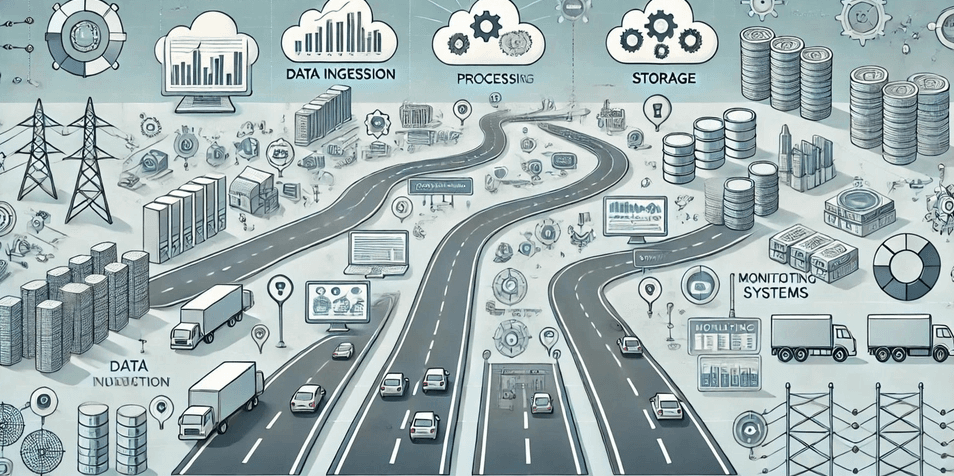
At its core, a Big Data pipeline is a series of processes and technologies that manage the flow of data—from ingestion and storage to processing and analysis. The scalability of these pipelines is crucial, as it ensures the system can handle growing data volumes without compromising performance. This capability is particularly important for the automotive industry, where data is generated at an exponential rate, especially with the rise of connected vehicles and smart manufacturing systems.

Scalable Big Data Pipelines: The Backbone of AI-Driven Optimization
A scalable Big Data pipeline is not just a tool for data storage—it is the backbone of AI-driven optimization in automotive manufacturing. These pipelines facilitate the processing of large volumes of structured and unstructured data in real-time, which is critical for AI algorithms that require high-quality, up-to-date information for accurate predictions and decision-making.
1. Real-Time Data Ingestion and Processing
In an automotive manufacturing setting, data is continuously generated by machines, sensors, and systems. For example, data from production lines is captured from sensors that monitor machinery conditions, including temperature, vibration, and pressure. This data is critical for identifying potential issues and inefficiencies before they result in costly downtime.
Scalable Big Data pipelines allow this data to be ingested in real-time, processed, and stored in a centralized system. This means that manufacturers can respond to problems as they arise, making immediate adjustments to production schedules, machine settings, or quality control processes. With AI-powered systems analyzing the incoming data, manufacturers can optimize production flows, enhance throughput, and reduce waste.
2. AI-Driven Predictive Analytics
AI thrives on data, and scalable Big Data pipelines provide the infrastructure necessary to feed AI systems with high-quality, real-time information. AI algorithms, such as machine learning (ML) models, can be used to identify patterns and trends in the data, providing insights that would otherwise be hidden.
One of the key applications of AI in automotive manufacturing is predictive analytics. By analyzing historical and real-time data, AI systems can predict machine failures, optimize maintenance schedules, and forecast demand for parts or components. Predictive maintenance, in particular, helps reduce downtime by allowing manufacturers to perform maintenance only when necessary, rather than adhering to fixed schedules. This is a significant step toward reducing the operational costs and environmental impact associated with unplanned machine failures and excessive resource consumption.
3. Optimizing Production Lines and Resource Allocation
AI algorithms also play a crucial role in optimizing production line operations. By processing real-time data from the production floor, AI can determine the most efficient workflows, ensuring that resources are used in the most optimal manner. For example, machine learning models can analyze data from assembly lines and identify bottlenecks, which can then be mitigated by adjusting production schedules or reallocating resources.
Moreover, AI can dynamically adjust the speed of operations to optimize energy consumption. By analyzing data on energy use across machines and processes, AI systems can make real-time adjustments to reduce power consumption during periods of low demand or high efficiency, contributing to sustainability goals.

Achieving Sustainability through Scalable Big Data Pipelines and AI
Sustainability has become a top priority for the automotive industry. As governments and consumers demand greener vehicles and production processes, manufacturers must find innovative ways to reduce their environmental impact. Scalable Big Data pipelines and AI-driven systems are key enablers of sustainable manufacturing practices.
1. Minimizing Waste and Reducing Carbon Footprint
By using data to monitor every stage of production, automotive manufacturers can minimize waste in the form of defective parts, excess materials, and energy consumption. Scalable Big Data pipelines allow manufacturers to track material usage across the entire production process, ensuring that materials are used efficiently and that waste is minimized.
AI-powered optimization tools can further enhance sustainability by reducing the carbon footprint of manufacturing. For instance, AI systems can optimize energy use on the production floor by adjusting machinery operations based on real-time data. These systems can also help minimize water usage, reduce emissions, and ensure that production is aligned with green manufacturing goals.
Additionally, the predictive capabilities of AI can be applied to inventory management, ensuring that raw materials and components are ordered only when needed, reducing waste associated with overproduction and excess stock. This approach leads to more efficient use of resources, ultimately contributing to a more sustainable production process.
2. Circular Economy and Product Lifecycle Management
Sustainable automotive production extends beyond the manufacturing floor—it also encompasses the product lifecycle. A key component of the circular economy is the reuse and recycling of materials, and Big Data pipelines can support this by tracking products and components throughout their lifecycle.
By integrating data from multiple sources, including suppliers, production systems, and end consumers, automotive manufacturers can better manage the end-of-life phase of vehicles. This allows manufacturers to identify opportunities for remanufacturing and recycling components, reducing waste and supporting the circular economy.
Moreover, by analyzing data on how vehicles are used over time, manufacturers can gain insights into durability and repairability, which can inform the design of more sustainable vehicles in the future.
EQ2:AI-Driven Demand Forecasting: ARIMA Model for Predicting Demand

Challenges and Opportunities in Implementing Scalable Big Data Pipelines
While the benefits of scalable Big Data pipelines and AI in automotive manufacturing are clear, there are challenges to consider. First and foremost is the integration of these advanced systems with existing legacy infrastructure. Many automotive manufacturers rely on older systems that may not be equipped to handle the volume and complexity of data generated by modern production lines. Transitioning to a scalable Big Data architecture requires significant investment in both technology and training.
Another challenge lies in data quality. AI algorithms are only as good as the data they are trained on, and poor-quality data can lead to inaccurate predictions and suboptimal decisions. Automotive manufacturers must ensure that their data is clean, accurate, and up-to-date, which requires robust data governance practices.
Despite these challenges, the opportunities presented by scalable Big Data pipelines and AI-driven optimization are immense. Manufacturers who embrace these technologies will be better positioned to meet the demands of a rapidly evolving industry, delivering more efficient, sustainable, and high-quality products.

Conclusion
Scalable Big Data pipelines are transforming the automotive industry, enabling manufacturers to harness the power of real-time data and AI-driven optimization. By providing a framework for collecting, processing, and analyzing vast amounts of data, these pipelines are enhancing operational efficiency, driving sustainability, and improving product quality. As automotive manufacturers continue to embrace AI and data-driven technologies, they will not only optimize production processes but also contribute to a greener, more sustainable future for the industry. The revolution has begun, and scalable Big Data pipelines are at the heart of it.